
Start with component function
Define the type of load, sliding contact or wear, temperature, corrosive environment, operating medium and required service life. For mating parts, lubrication, speed and counterface material also matter.
The alloy family is only a starting point
Bronzes and brasses differ in composition, castability, machinability and service behaviour. A general family name should not replace the grade stated on the drawing.
If the design permits an alternative, agree the equivalence criteria and required material documentation.
Process and delivered condition
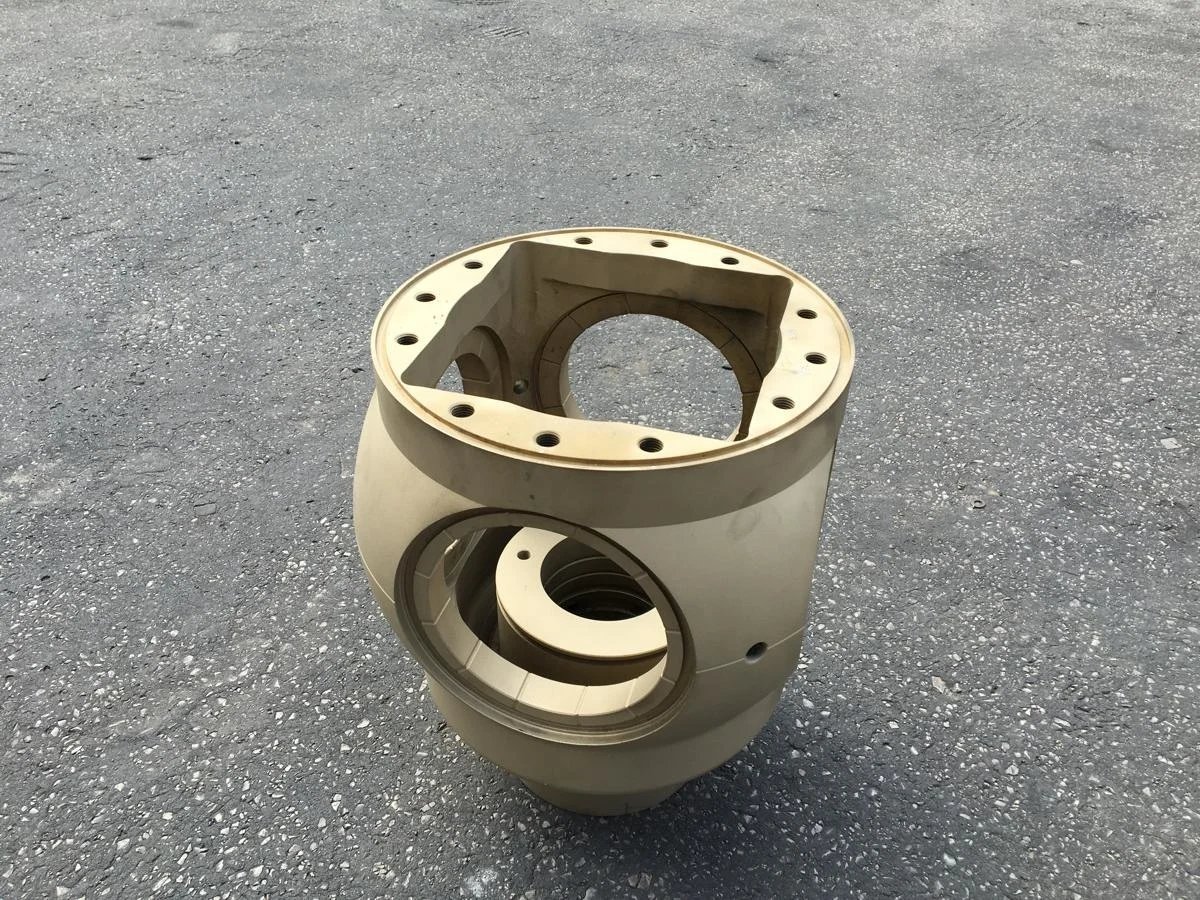
Provide geometry, mass, quantity, information about patterns or samples, machined surfaces, tolerances and inspection requirements. The manufacturing route affects achievable properties and machining scope.
Information for an enquiry
A clear description of operating conditions and finished-component requirements reduces the risk of interpreting a broad material name incorrectly.
- full material designation and required standard edition
- drawing, dimensions, mass and quantity
- loads, motion, lubrication, temperature and environment
- tolerances, allowances and machined surfaces
- required examination and material certificates
Solid copper-alloy plain bearings
For solid copper-alloy plain bearings, the current ISO catalogue includes ISO 4382-1:2021 for cast materials and ISO 4382-2:2021 for wrought materials. Their scope does not replace a general casting specification or design requirements.
Official sources: ISO 4382-1:2021 and ISO 4382-2:2021
EXPLORE
Related services and guides
Bronze, brass and copper castings from METAL-KOLOR in Poland. Share your material grade, dimensions and quantity to discuss your component.
Foundry technical knowledgePractical guidance to help describe component requirements and prepare the information needed for a foundry enquiry.
Contact METAL-KOLOR | Starachowice, PolandContact METAL-KOLOR in Starachowice, Poland. Call +48 41 273 00 00 to discuss castings, machining or white metal bearing refurbishment.